
"protein changes"
900 article(s) found

Why is coffee refreshing? How does caffeine work?
The main ingredients of coffee are: 1. Caffeine caffeine is the most eye-catching of all the ingredients of coffee. It is a kind of phytoxanthin (animal muscle component). Its properties are the same as theobromine contained in cocoa, green tea contains the same theophylline, the percentage of reduction after baking is very small, and the effect of caffeine is very extensive. it affects the brain, heart, blood vessels, gastrointestinal tract, muscles and kidneys.

What are the ingredients of coffee beans? what are the main nutritional components of individual coffee beans?
Caffeine is the most eye-catching of all the ingredients in coffee. It is a kind of phytoxanthin (animal muscle component). It has the same properties as theobromine contained in cocoa, green tea contains the same theophylline, and the percentage of reduction after baking is very small. Caffeine has a very extensive effect. It will affect various parts of the human brain, heart, blood vessels, gastrointestinal tract, muscles and kidneys, and the right amount of caffeine will.

About coffee beans Analysis of the main contents of a coffee bean what are the ingredients in the coffee bean
Caffeine is the most eye-catching of all the ingredients in coffee. It is a kind of phytoxanthin (animal muscle component). It has the same properties as theobromine contained in cocoa, green tea contains the same theophylline, and the percentage of reduction after baking is very small. Caffeine has a very extensive effect. It will affect various parts of the human brain, heart, blood vessels, gastrointestinal tract, muscles and kidneys, and the right amount of caffeine will.

Detailed Analysis of Coffee Bean ingredients basic knowledge of Fine Coffee
Moisture: the water content of coffee beans varies greatly with different processing stages and products. The moisture content of wet coffee beans with film is about 50%, while that of dried raw coffee beans is about 10%-13%. The water content of roasted coffee beans is only less than 5%. The existence of water in coffee beans is the same as other kinds of food and beverages, because it contains a considerable amount of hydration colloid macromolecules.

What are the ingredients in the coffee? How do you drink the coffee powder? What's a good brand of coffee powder?
Professional coffee knowledge exchange more information about coffee beans Please follow the coffee workshop (Wechat official account cafe_style) caffeine is the most eye-catching of all coffee ingredients. It belongs to plant xanthamins (animal muscle components). It has the same properties as theobromine in cocoa and theophylline in green tea. The percentage of reduction after baking is very small, and caffeine plays a very important role.

A brief introduction to the History and Culture of the Origin and Development of Fine Coffee beans in Fine Manor of Guatemala with Chocolate charm
Because wild civets are obviously better at selecting good coffee fruits, this kind of coffee has outstanding characteristics. Coffee source editor Kopi Luwak, Kopi (Indonesian, coffee), Luwak refers to a kind of arboreal wild animal commonly known as civet in Indonesia. Kopi Luwak, produced in Indonesia, is one of the most expensive coffee in the world. Indonesia grows a lot of it.

The expression of alcohol and strength in the analysis of coffee components
For coffee, the touch of the mouth and palate comes from fatty oil, a liquid ingredient insoluble in water, and a sediment suspended in coffee water after brewing. In addition to providing texture for the overall taste of coffee, suspended matter in coffee also affects the taste of coffee by forming colloids. 1.Fatty oil raw coffee beans contain 7% Mui 17% fat.

Benefits of caffeine caffeine reduces the risk of Alzheimer's disease
Research by David Bluem, PhD, of the French Institute of Health and Medicine, and Lille laboratory staff has shown that caffeine has a good effect on some brain diseases, especially Alzheimer's disease (commonly known as Alzheimer's disease). Although the findings, published in the American Journal of Geriatric Neurobiology, have only been confirmed in mice, people who drink coffee for a long time can still talk about it.

How to choose milk and foam suitable for flower pulling? How long does it take to learn the simplest pattern of coffee flowers?
Professional coffee knowledge exchange more coffee bean information please follow the coffee workshop (Wechat official account cafe_style) key discussion: is coffee flower really that important? The foam at the top of the flawless cappuccino doesn't happen by accident. The color layer in the freshly poured latte is also different. They are there for two things: the skill of baristas and the quality of the milk they use. Low

What chemical reaction happens when milk becomes foam? How does milk become foam?
Professional coffee knowledge exchange More coffee bean information Please pay attention to coffee workshop (Weixin Official Accounts cafe_style) Although you don't need a degree in chemistry, it is indeed a more complicated technology to understand the chemical effect of milk on coffee. But if you want to make perfect, beautiful foam, you have to learn about milk. Milk goes with it.

Diagrams of the world-famous Kopi Luwak making process in Coffee Encyclopedia
Muscat coffee (Kopi Luwak), Kopi (Indonesian, coffee), Luwak refers to a kind of arboreal wild animal commonly known as civet in Indonesia. Civet coffee is the most expensive coffee in the world, with a price of several hundred US dollars per pound. It is extracted from the feces of the civet and processed. The civet eats the ripe coffee fruit and is excreted through the digestive system.

Analysis of main components of cooked Coffee beans in Yunnan
Follow Ka Pin (Wechat official account vdailycom) found that the beautiful cafe opened a small shop of its own-Shenyang, the birthplace of China, has a lot of authentic cuisine. There is a melting pot of culture. the ancient city with a history of more than 5000 years, the first capital of the Qing Dynasty, was once called Xishui, Fengtian, Shengjing and so on. There are Hui, Xian and Japanese communities there.

Coffee knowledge Chemical composition of Coffee General knowledge of Coffee
How many substances does a cup of coffee contain? Coffee extracted by traditional methods such as hand-brewing and Syphone contains more than 200 substances, while 1500 qualities can be extracted in an instant when using a Ruyi coffee machine and mocha pot. Unexpectedly, there are so many things in a cup of flavored water, the charm of coffee is made up of these substances. Coffee beans.

Common sense of Fine Coffee beans Chemical composition of coffee
How many substances does a cup of coffee contain? Coffee extracted by traditional methods such as hand-brewing and Syphone contains more than 200 substances, while 1500 qualities can be extracted in an instant when using a Ruyi coffee machine and mocha pot. Unexpectedly, there are so many things in a cup of flavored water, the charm of coffee is made up of these substances. Coffee beans.

Chemical reaction and temperature during coffee roasting changes of reactive substances in coffee roasting process
Professional coffee knowledge exchange more coffee bean information please follow the coffee workshop (Wechat official account cafe_style) professional coffee roasting | coffee roasting is too complicated? A picture teaches you how the baking process reacts to the chemical composition of the baking. Sucrose: melting point 187.8 ℃-sugar? Complex = caramelization-water CO2 escapes to produce an explosive First Crack phenomenon. I'm in the roaster.

The chemical effect of coffee milk! What are the influence factors of milk on coffee flower drawing?
Professional coffee knowledge exchange more coffee bean information Please pay attention to the coffee workshop (Wechat official account cafe_style) although you do not need to have a degree in chemistry, it is indeed a relatively complicated technology to understand the chemical effects of milk on coffee. However, if you want to make a perfect and beautiful milk foam flower, then you must seriously learn about milk. The milk will follow
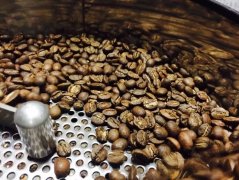
Detailed analysis of mineral carbohydrates in coffee beans
Moisture: the water content of coffee beans varies greatly with different processing stages and products. The moisture content of wet coffee beans with film is about 50%, while that of dried raw coffee beans is about 10%-13%. The water content of roasted coffee beans is only less than 5%. The existence of water in coffee beans is the same as other kinds of food and beverages, because it contains a considerable amount of hydration colloid macromolecules.

Main chemical constituents of raw coffee beans
Tannin: after extraction, tannin will turn into a yellowish powder, which is easy to blend into water. After boiling, it will decompose and produce pyrosylic acid, which will make the coffee taste worse. If the coffee is soaked and left for several hours, the color of the coffee will become stronger than when it was just soaked, and it is not tasty enough, so it is said that it is best to finish it as soon as possible. Fat: the fat contained in coffee, in flavor.
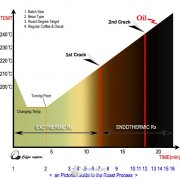
Roasting technology of boutique coffee reactions and changes in the roasting process of coffee
Coffee roasting (coffee roasting) means that through heating raw beans, starch in raw beans is converted into sugars and acids at high temperature, substances such as cellulose will be carbonized to varying degrees, water and carbon dioxide will be volatilized, proteins will be converted into enzymes and fats, and the remaining substances will be combined to form an oil film on the surface of coffee beans, and in the process coffee acids will be formed.

Detailed analysis of low molecular weight sugars in coffee beans
Moisture: the water content of coffee beans varies greatly with different processing stages and products. The moisture content of wet coffee beans with film is about 50%, while that of dried raw coffee beans is about 10%-13%. The water content of roasted coffee beans is only less than 5%. The existence of water in coffee beans is the same as other kinds of food and beverages, because it contains a considerable amount of hydration colloid macromolecules.